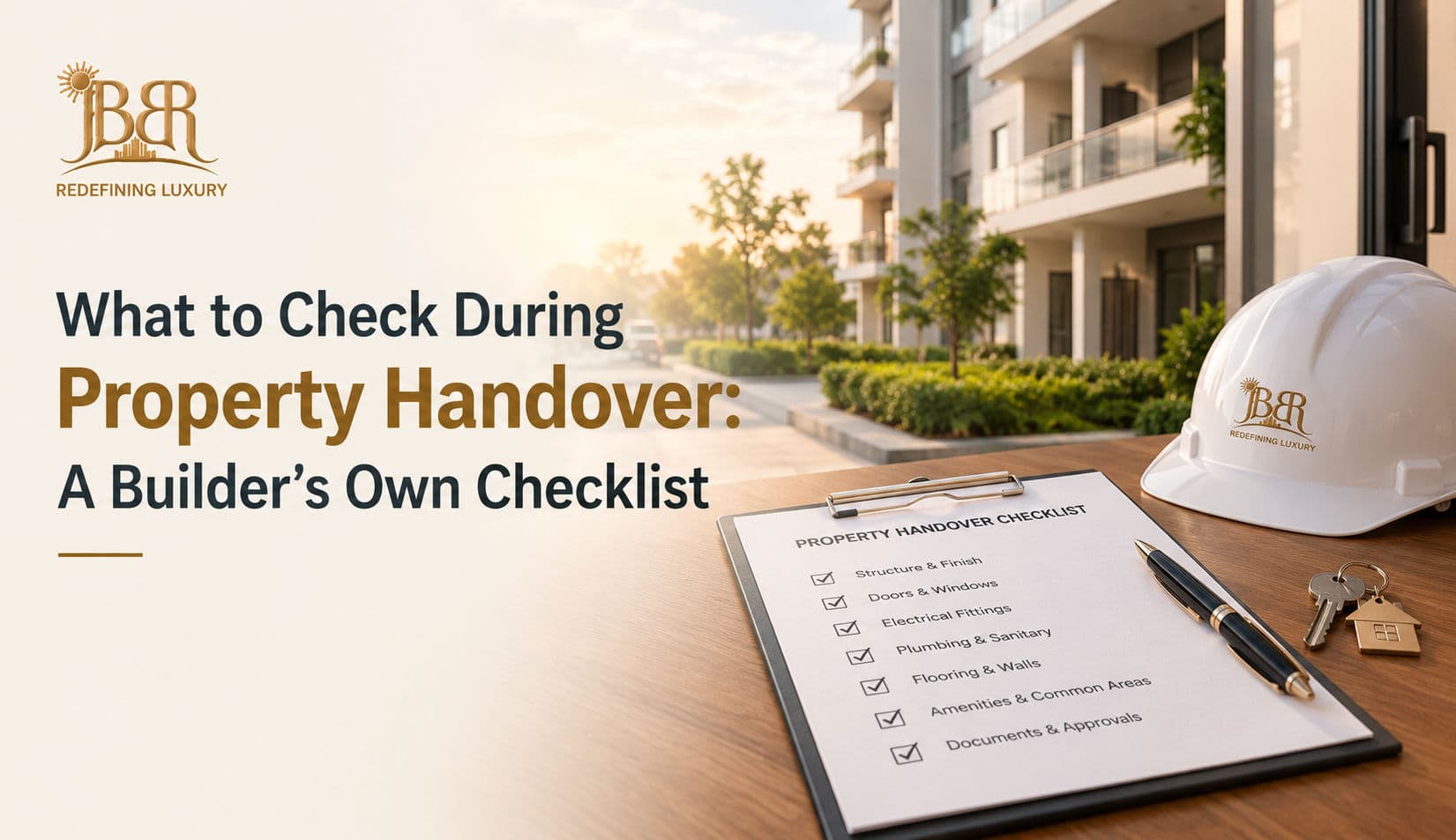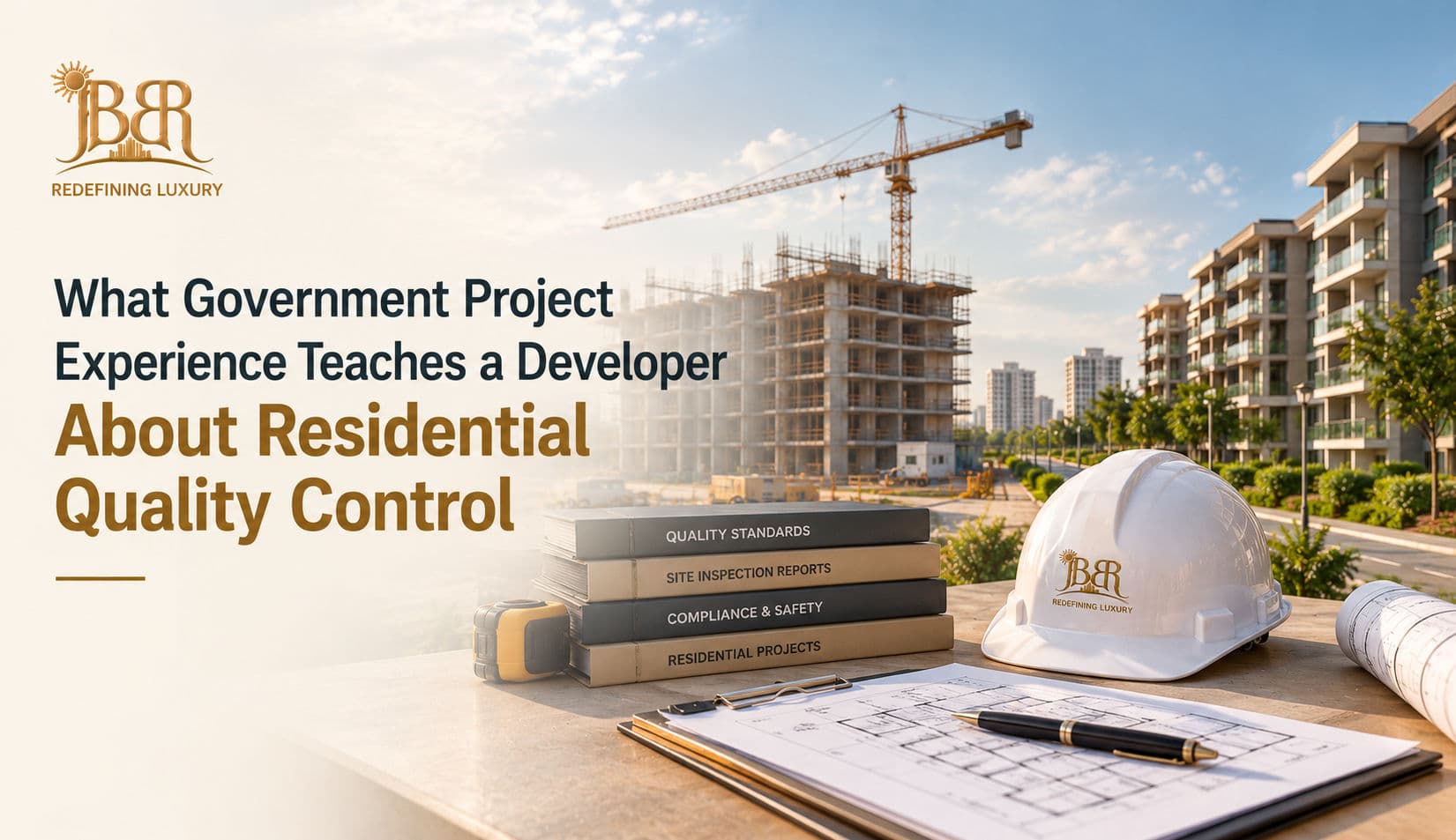
When you buy a home, you rarely see how it was built. You see the finish, the fittings and the paint. What decides how the home holds up in ten or twenty years is what happened before all of that: the materials, the checks, and the paperwork behind each stage. That is where quality control in residential construction either exists or does not.
Government projects are one of the strictest places to learn it. In short, a developer with government project experience is used to written specifications, tested materials, stage-wise inspections and a clear record of every decision. Those habits carry over well into homes and townships. Here is how, and what you can check yourself.
Why Government Projects Set a Higher Bar
Government and public-sector work runs on process. Specifications are fixed before work begins. Materials are tested against standards. Work is inspected and signed off at each stage, and the paperwork stays on file long after the project is complete.
A contractor on such a project cannot rely on "it looks fine." Someone else checks, and the record has to support the claim. A developer who has worked this way for years tends to treat inspection as routine rather than as a hurdle.
What a Developer Learns From Government Project Experience
1. Specifications come first, and are written down
On public projects, the materials, grades and methods are defined in advance. For a homebuyer, the equivalent is simple: what was promised in your agreement should match what is built. Vague descriptions leave room for substitution.
2. Materials are tested, not assumed
Cement, steel, aggregates and other inputs are checked against standards before they go into the structure. This is one of the most important quality checks in construction, because a defect inside a slab or column cannot be seen or fixed easily later.
3. Work is inspected at each stage
Foundation, structure, services and finishing are reviewed one stage at a time, with sign-off before the next begins. Problems get caught while they are still cheap to correct.
4. Documentation is part of the job
Test reports, inspection records and drawings are maintained as a matter of course. For a buyer, that record is what makes a later question, such as "was this done to specification?", answerable.
5. Accountability continues after handover
Public work is audited and reviewed over time. A developer who is used to this is more likely to treat post-possession issues as part of the job, not as an afterthought.
How These Lessons Show Up in Residential Projects
Discipline from government work | Residential equivalent | What it means for a buyer |
|---|---|---|
Fixed specifications | Clear specifications in the agreement | Fewer surprises at possession |
Material testing | Tested cement, steel and fittings | A structure built on verified inputs |
Stage-wise inspection | Reviews before each stage moves on | Problems found early, not after handover |
Documentation trail | Records and drawings kept on file | Easier to resolve questions later |
Long-term accountability | Defect and after-sales process | Clarity on who to approach and how |
Good residential quality control is not a single check. It is this chain, with every link recorded.
Where ISO 9001:2015 Fits In
Process matters most when it is repeated the same way on every project. This is what a quality management system is for. As an ISO 9001:2015-certified builder in Lucknow, JBBR works within a documented quality system.
To be clear about what this means: ISO 9001:2015 is a standard for how an organisation manages quality. It does not replace your own checks, but it does mean the builder has defined processes that can be reviewed. JBBR's work across residential, industrial and government projects is part of why these processes are treated as routine.
What a Track Record Shows
Experience across different kinds of projects is useful because it tests a builder's systems in different conditions. A long delivery track record is also something a buyer can verify, by visiting completed projects and speaking to people who live or work there. Track record is evidence. A brochure is not.
Checks Buyers Can Make Themselves
You do not need an engineering background to ask the right questions. Before you book with any residential builder in Lucknow, try this:
- Ask for the specification. Which materials and brands are promised, and where is it written?
- Ask about testing. How are materials tested, and can you see sample reports?
- Ask about stage inspections. Who signs off at each stage, and is it recorded?
- Visit a completed project. Check finish, upkeep and how residents describe their experience.
- Verify the paperwork. Check the RERA registration and approvals before you pay.
If you are looking at a plotted township such as Kanvas on Lucknow–Kanpur Road, extend the same thinking to what is easy to overlook: road finish, drainage, the layout as per the approved plan, and service provisions.
Final Thoughts
Government project experience teaches a developer that quality is a process, not a promise. Written specifications, tested materials, stage-wise inspection and a clear record give residential buyers something concrete to check. If you want to understand how JBBR approaches this, you can consult our team and ask any of these questions directly.
Frequently Asked Questions
Q1. What is quality control in residential construction? It is the set of checks that make sure a home is built to its specifications. These include testing materials, inspecting each stage of work, and keeping records so the work can be verified.
Q2. How does government project experience help a residential developer? Government work typically involves fixed specifications, material testing, stage-wise inspections and detailed documentation. A developer used to this tends to apply the same discipline to homes.
Q3. Does ISO 9001:2015 certification guarantee quality? No. It shows that a builder follows a documented quality management system. Buyers should still verify specifications, approvals and completed projects themselves.
Q4. What construction quality standards should a homebuyer ask about? Ask which materials are specified, how they are tested, and who inspects and signs off at each stage. Also ask where these details are written, such as in the agreement.
Q5. How can I check a residential builder in Lucknow before booking? Verify the RERA registration and approvals, visit a completed project, speak to residents, and ask for the specification and testing process in writing.
Q6. Why do documents and records matter for quality? Records show what was done, when, and to what standard. If a question comes up after possession, those records are how it gets answered.