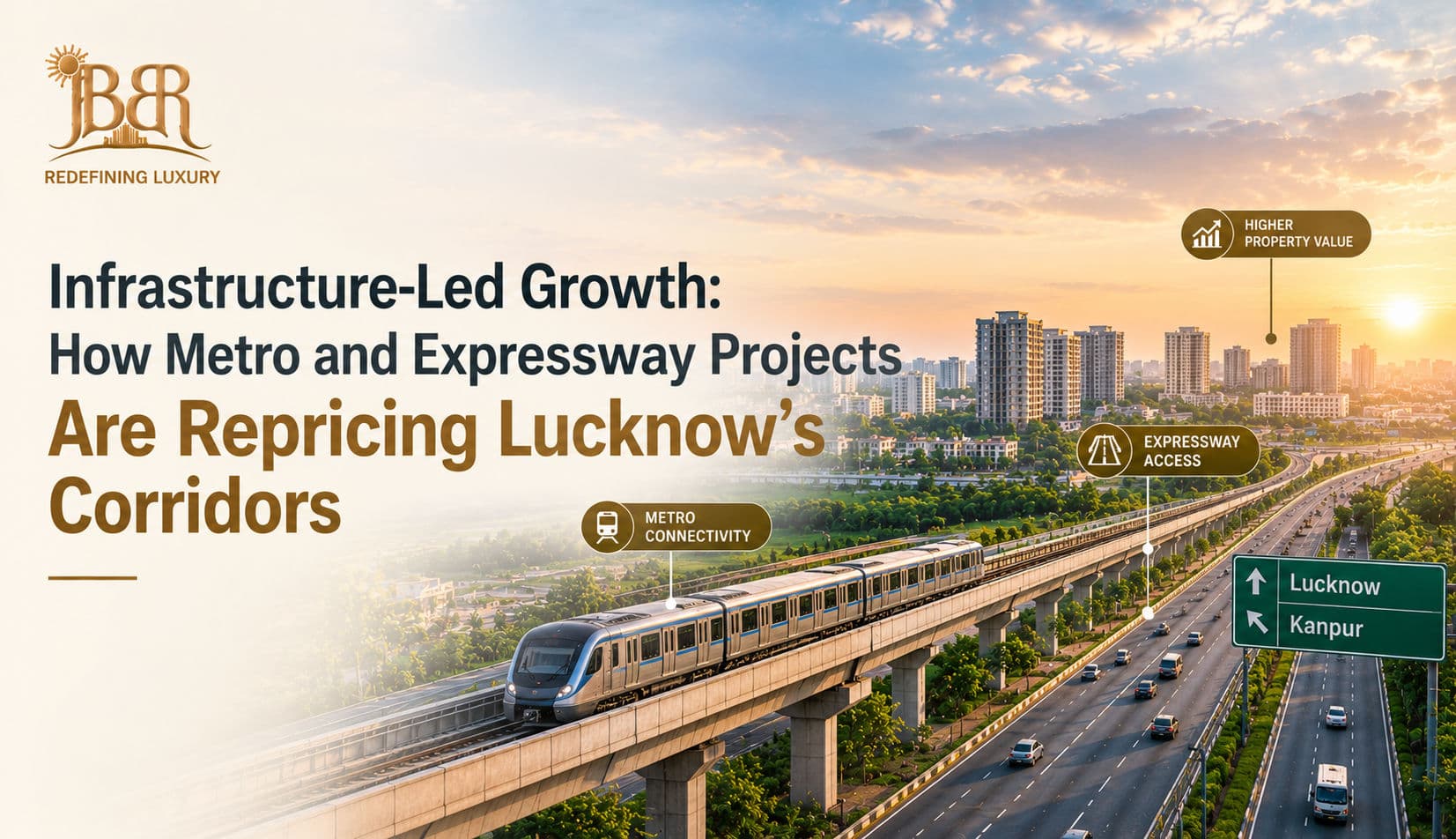
Connectivity is usually the first thing buyers ask about and the last thing they actually verify. On Lucknow-Kanpur Road, that's worth fixing, because the corridor's connectivity story is stronger than most buyers realize — not because of one big project, but because several access points already exist or are actively under construction at the same time.
Here's an honest breakdown of what "well-connected" actually means for this stretch.
The Access Points That Matter
National Highway 27 (NH27)- This is the corridor's backbone — a direct road link between Lucknow and Kanpur that's existed for years and is currently being upgraded, with NHAI-approved lane additions near the Nawabganj tollbooth to reduce congestion for daily commuters.
The Upcoming Kanpur-Lucknow Expressway (Awadh Expressway / NE6)- A six-lane, access-controlled expressway is under construction parallel to NH27, connecting South Lucknow near Shaheed Path directly to Kanpur. Once complete, it's expected to meaningfully cut intercity travel time — a direct upgrade for anyone commuting between the two cities regularly.
Transport Nagar Metro Station -Unlike corridors still waiting on future metro approvals, this stretch already has functioning rail transit — Transport Nagar station sits directly on Kanpur-Lucknow Road on the Red Line, giving residents existing access rather than a promise.
Airport Proximity -Chaudhary Charan Singh International Airport is a short, manageable drive from several projects along this corridor, which matters for residents who travel frequently or work in professions tied to air connectivity.
Outer Ring Road Access- The corridor connects into Lucknow's Outer Ring Road network, giving residents an alternative route around the city center rather than having to pass through the most congested inner-city stretches for cross-town travel.
How the Access Points Compare
Access Point | Type | Status | Why It Matters |
NH27 | Highway | Existing, being widened | Direct Lucknow-Kanpur road link, daily commute backbone |
Awadh Expressway (NE6) | Expressway | Under construction | Will cut intercity travel time once operational |
Transport Nagar metro station | Rail | Operational | Existing rail access, not a future promise |
CCS International Airport | Air | Existing | Short drive for frequent flyers and business travelers |
Outer Ring Road | Highway | Existing | Alternative cross-city route avoiding inner congestion |
What stands out here is the mix — most emerging corridors in Indian cities lean on a single access point (usually a highway or a promised metro line). Kanpur Road already has road, upcoming expressway, existing rail, and airport access working together, which is a stronger and more durable connectivity profile than a locality still waiting on one project to materialize.
Why This Matters Beyond the Daily Commute
Good connectivity does more than shorten a commute — it directly affects long-term livability and resale value. A corridor with multiple access points is less dependent on any single project's timeline, which reduces risk for buyers planning to stay long-term. This is part of why investors have been paying close attention to the investment momentum building along Kanpur Road— connectivity and appreciation tend to move together.
Planned townships are positioned to take fuller advantage of this than scattered, unplanned plots. The Kanvas plotted township near Junabganj, for instance, sits close enough to NH27 to benefit from both the existing highway and the upcoming expressway without being right on top of the traffic.
Connectivity Isn't Just About Roads
Physical access is only part of the picture — commercial connectivity matters too. As the commercial hub taking shape in Rashmi Khand shows, this side of Lucknow isn't just getting easier to reach — it's also gaining more reasons to be reached, with offices, retail, and services opening closer to where people already live.
Developers with projects across this side of the city, including JBBR's project pipeline, tend to factor these overlapping connectivity layers into site selection rather than choosing locations on price alone.
What to Verify Before Assuming "Well-Connected"
Marketing material often oversells connectivity. Before treating any of the above as settled, buyers should confirm:
Connectivity claims are also a good moment to apply the same scrutiny recommended when vetting a developer before you buy— a developer's honesty about current infrastructure is often a reasonable proxy for their honesty about everything else.
Frequently Asked Questions
Is Lucknow-Kanpur Road well-connected to the rest of the city? Yes — it has direct highway access via NH27, an operational metro station, and Outer Ring Road connectivity, giving residents multiple routes rather than relying on a single road.
Is there already a metro station near Kanpur Road? Yes, Transport Nagar station on the Red Line sits directly on Kanpur-Lucknow Road and is already operational.
How far is Kanpur Road from the airport? Several projects along this stretch are a short, manageable drive from Chaudhary Charan Singh International Airport, though exact distance depends on the specific plot location.
Will the new expressway make Kanpur Road more connected to Kanpur city? Yes — the Awadh Expressway (NE6), once operational, is expected to meaningfully cut travel time between Lucknow and Kanpur for residents along this corridor.
Is traffic a problem on Kanpur Road? Some stretches see peak-hour congestion, though the ongoing NH27 widening near Nawabganj is intended to ease this over time. It's worth checking traffic patterns in person before buying.
Does good connectivity always mean higher property value? Not automatically, but a corridor with multiple, overlapping access points — road, rail, and air — tends to be a more resilient long-term bet than one relying on a single infrastructure project.